

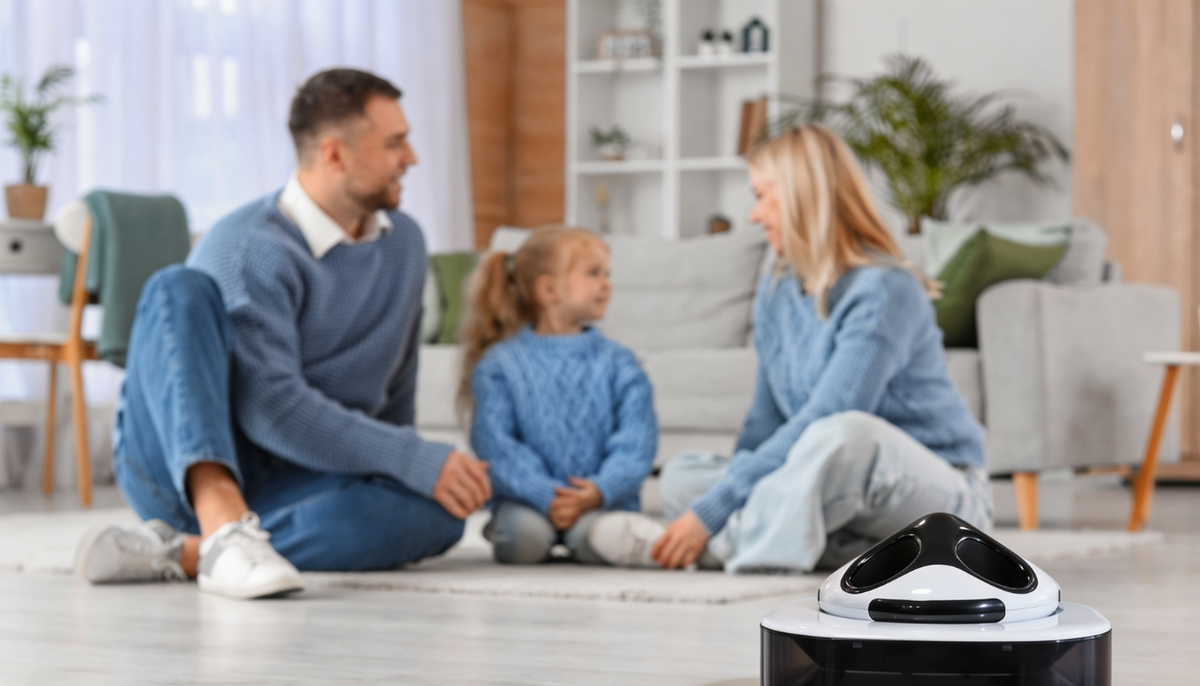
A home robot should make daily life easier, not add another device to manage. Many Americans struggle with daily household tasks due to lack of time and energy. The right machine can handle repeat chores with less effort.

Choose a personal service robot that fits your floors, room layout, and furniture. It should move well between rugs, hard floors, and tight spaces without causing problems for people or pets.
Useful home robotics handle routine household tasks, contextual checking, and daily scheduling. In modern living spaces, a compact, versatile robot helps streamline daily home routines while respecting your living area.
The best choice also fits your indoor life over time. Think about where it will charge, how often it needs routine care, and whether it can work quietly around your routine.
Spatial Understanding: Why Home-Ready Robotics Matter for Living Spaces
A home is full of changing paths, from open floors to crowded corners. A spatial understanding home robot can read these spaces and move with more care. This makes home-ready robotics feel more useful in daily life.

Why Spatial Understanding Matters in Living Spaces
Strong spatial understanding helps a robot build a clear map of each room. LiDAR uses laser scans for detailed distance data, while camera-based mapping can spot objects along the route. Together, these tools support safer and more precise movement.
Simple bump-and-move navigation may work in open areas, but it can miss tight gaps, edges, and low items. Cliff sensors add protection near stairs and ledges. Virtual no-go zones can also keep a robot out of cluttered or risky areas.
Contextual Awareness for People, Pets, and Everyday Objects
Contextual awareness helps a robot react to what is happening around it. It can adjust when a dog rests in the hallway, a child leaves toys on the floor, or a cable crosses a path. This type of home awareness reduces the need for frequent rescue.
In compact homes, chair legs, bags, and small tables can change a route in seconds. A robot that recognizes obstacles can slow down, choose another path, and continue its task. That response supports a calmer shared space.
Reliable Movement Around Furniture and Room Transitions
Furniture layouts often create narrow routes that demand careful navigation. Home-ready robotics should handle tight corners, clustered seating, and room entrances without scraping walls or getting stuck. Real-time adjustments keep movement steady as the home changes.
Many home robots can cross low thresholds below 0.8 inches, which helps them move effortlessly between rooms. They cannot climb stairs, so multi-floor mapping is useful for homes with more than one level. Separate maps help the robot recognize each layout and work within safe limits.
Choose an Enclosed Design for Homes That Fits Your Interior
An enclosed design for homes makes a robot feel like part of the room. Before picking a robot and its base, measure the storage spot's height, width, and depth.
A home-ready model with a low profile fits under sofas, beds, and more. A sofa with 4 inches of clearance can hide the docking area.

How an Enclosed Structure Protects Kids, Pets, and Furniture
An enclosed structure keeps moving parts and cables safe from kids and pets. It also helps avoid bumps on furniture while moving around.
Good spots include an open side table or under-stair nook. Avoid places near stairs, wet floors, thick rugs, and sharp edges.
Balancing Aesthetic Product Design with Functional Robotics
Placement should be neat but allow for movement. Utility cabinets are okay if power is nearby, but they need airflow for charging.
Avoid sealed drawers and closed boxes without ventilation. Heat, dust, moisture, and sudden temperature changes can harm charging and performance.
- Leave clear space around the dock for easy returns.
- Choose a flat, dry surface without step-ups.
- Keep the area clear of loose cords and pet bowls.
Low-Disturbance Behavior for Everyday Home Routines
A low-disturbance home robot should fit into the household without adding noise or stress. Its timing, sound level, and movement all shape how well it supports everyday home routines.
Quiet Operation That Respects Work, Rest, and Sleep
Check a robot’s listed decibel level before bringing it home. A low-disturbance home robot operates at low decibel levels, ensuring quiet performance during daily life. Scheduled tasks allow the robot to work seamlessly while people are resting or on a call.
Low-disturbance behavior matters near thin walls, sleeping babies, pets, and home offices. Scheduled routines also let the robot work while people are out, resting, or on a call.
Predictable Autonomous Movement and Safe Human Proximity
Good obstacle detection helps a robot slow down and change course near shoes, furniture, or a pet bowl. Predictable movement makes shared spaces feel calmer and safer.
A brief weekly setup can improve results. Spend five minutes clearing cords, lifting loose rugs, and moving small items that may block its path.
Background Robotics That Help Without Demanding Attention
Background robotics work best when they handle small tasks with little input. Daily routines like monitoring high-traffic areas and coordinating household tasks help keep the home organized without requiring your active attention.
The goal is simple support that stays out of the way. A quiet, reliable robot can keep floors more manageable without becoming the focus of the day.
Natural Interaction and Home Robot Control That Feels Simple
A helpful robot should be easy to use, not another device to learn. Simple controls make it easy to fit daily automation into household life.
Natural Interaction for Every Member of the Household
A natural interaction robot can understand clear voice requests. For example, starting a routine check or returning to its dock. It also remembers preferred schedules and operational settings over time.
This type of interaction helps older adults and people with disabilities. Easy voice prompts mean no need to handle small buttons or complex app menus.
WhatsApp Robot Control and WeChat Interaction Options
App tools make controlling home robots more flexible. Residents can start, pause, monitor, and schedule tasks from a phone. They can also set active coverage zones and adjust operational preferences for different rooms.
WhatsApp robot control offers a familiar way to check a robot’s status or send a basic command. WeChat interaction provides similar convenience for those who use it daily.
- Schedule runs while residents are away or asleep.
- Create no-go areas near pet bowls or charging cables.
- Check battery status and software update notices.
Privacy, Permissions, and Clear User Control
Clear permissions are key when several people share one device. Household members should know who can view status, change schedules, or modify operational settings.
Reliable wireless service and stable power are essential for these features. Keeping extension cords out of walkways and furniture gaps reduces clutter and tripping risks.
Smart Home Household Coordination and Long-Term Practical Value
Good smart home coordination should make life easier, not harder. A home robot works best when it knows its path, has a reliable charging spot, and fits into the household's daily routine.
Coordinating Daily Tasks Across Connected Home Devices
Make sure there's about 3 feet of open space in front of the dock. Also, keep 4 to 6 inches of space on each side. Avoid placing bins, toys, or movable furniture nearby. A clear charging dock area also helps protect sensors, contacts, and power areas from dust and debris.
Regular care ensures long-term performance. Keeping sensors clear and inspecting physical joints helps maintain smooth autonomous movement over time.
A Practical Fit for Modern Living
BoltzLog combines spatial awareness, thoughtful design, and practical robotics for modern homes. With its enclosed structure and low-disturbance behavior, Flyer O1 gives each home robot a clearer purpose. It helps around living spaces without becoming another task to manage.
Share:
How Can a Home Robot Stay Helpful Without Being Intrusive?